A 4nowar.org project
Nuseirat, Gaza · Cairo, Egypt · June 2026
Hanin left Gaza to survive. The system nearly finished what the war started.
She is 33. She has four daughters. She has a liver tumor that can rupture at any moment. No medication. No home. A hospital appointment on Wednesday.
Donate to HaninThe story · by Marta
I have known Hanin since October 2025.
Someone passed me her contact, the way it always works in this kind of work — a chain of people passing names, families that are falling and need someone to catch them. I was already carrying more than a hundred open campaigns. When Hanin's name arrived, what I found on the other side was a family with nothing. No network, no help, no one holding them up.
They lived on the top floor of a partially destroyed building in Nuseirat. They paid $150 a month in rent, which they couldn't always manage. Hanin had three daughters — Maha, ten, Sama, six, and Maryam, born 4 December 2024. The girls were very thin. They had never had access to education, toys, or barely any clothing. A family with no margin and no support.
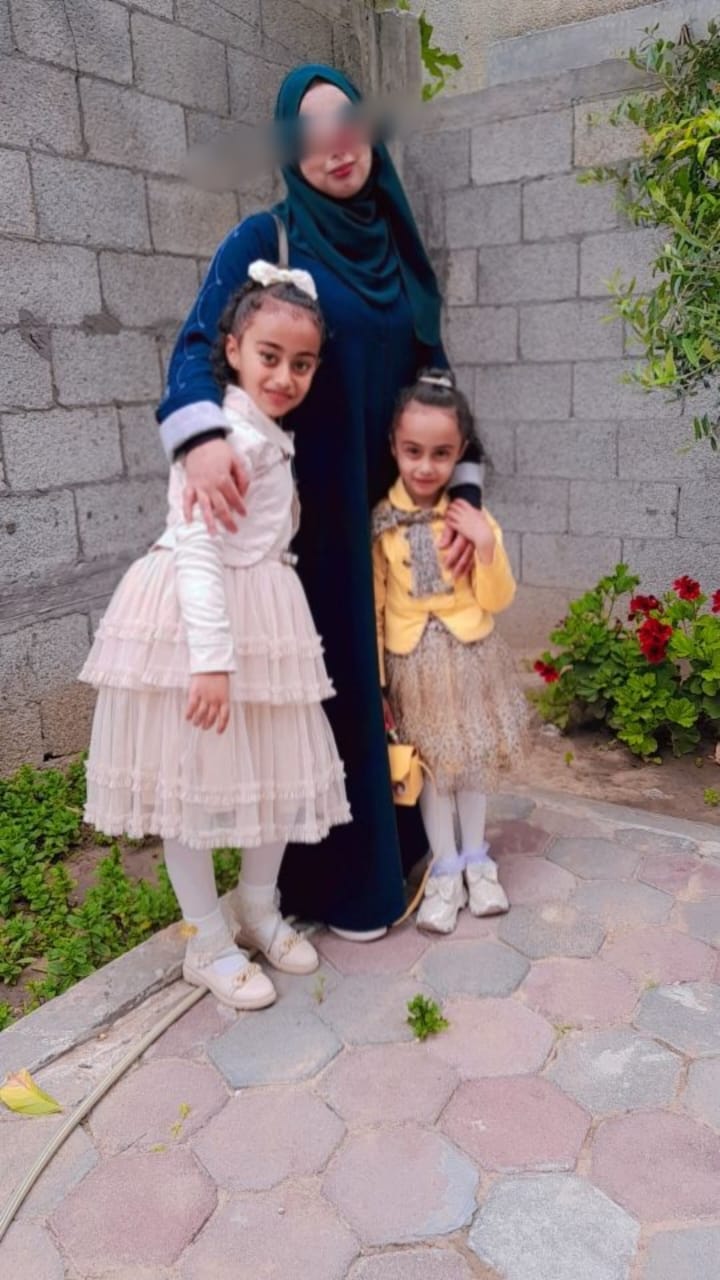
Hanin with Maha and Sama. Before.
Hanin told me about July 2025. During the famine that Israel imposed by blocking all food access, they ate lentil bread for 54 days. Only that. Bilal, Hanin, and the three girls — Maryam just seven months old. Fifty-four days.
From the beginning, what struck me about Hanin and Bilal was how they handled an impossible situation. In over a year of contact, they have never asked for help unless they were at a breaking point. Never. I have more than a hundred campaigns open — I know how to tell. They are honest and responsible, and that is not a small thing when everything else fails.
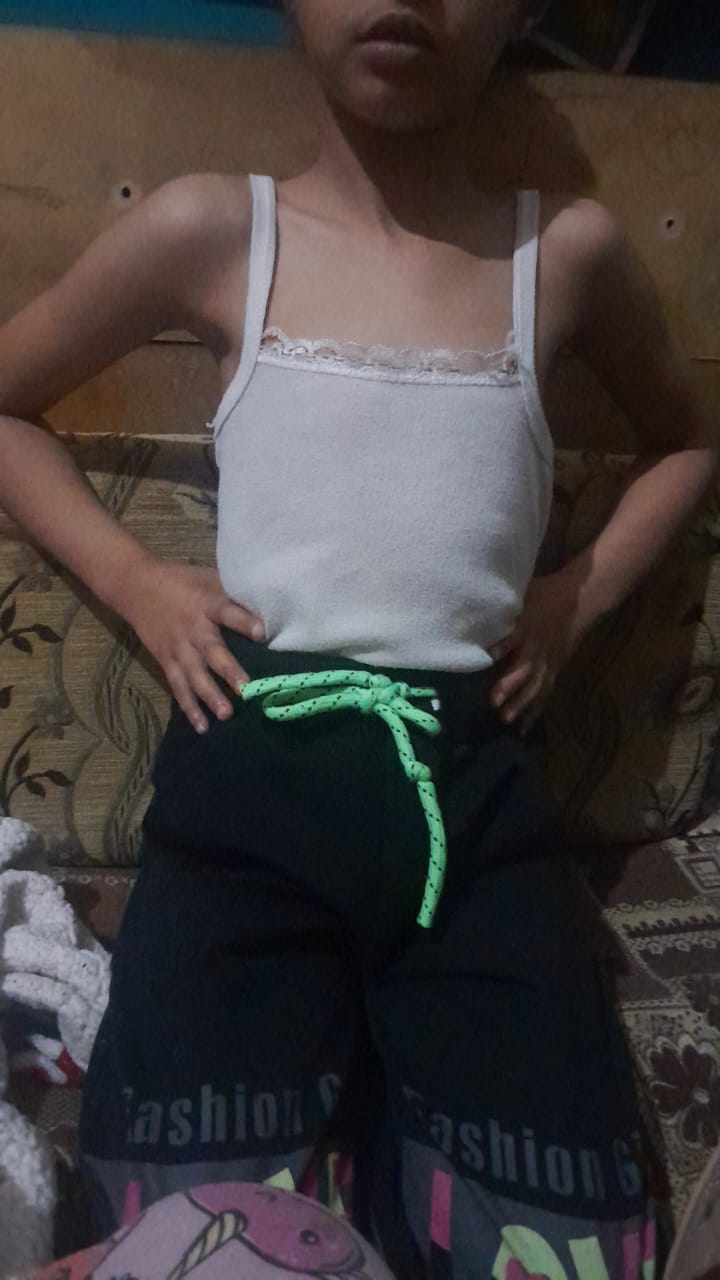
Sama.
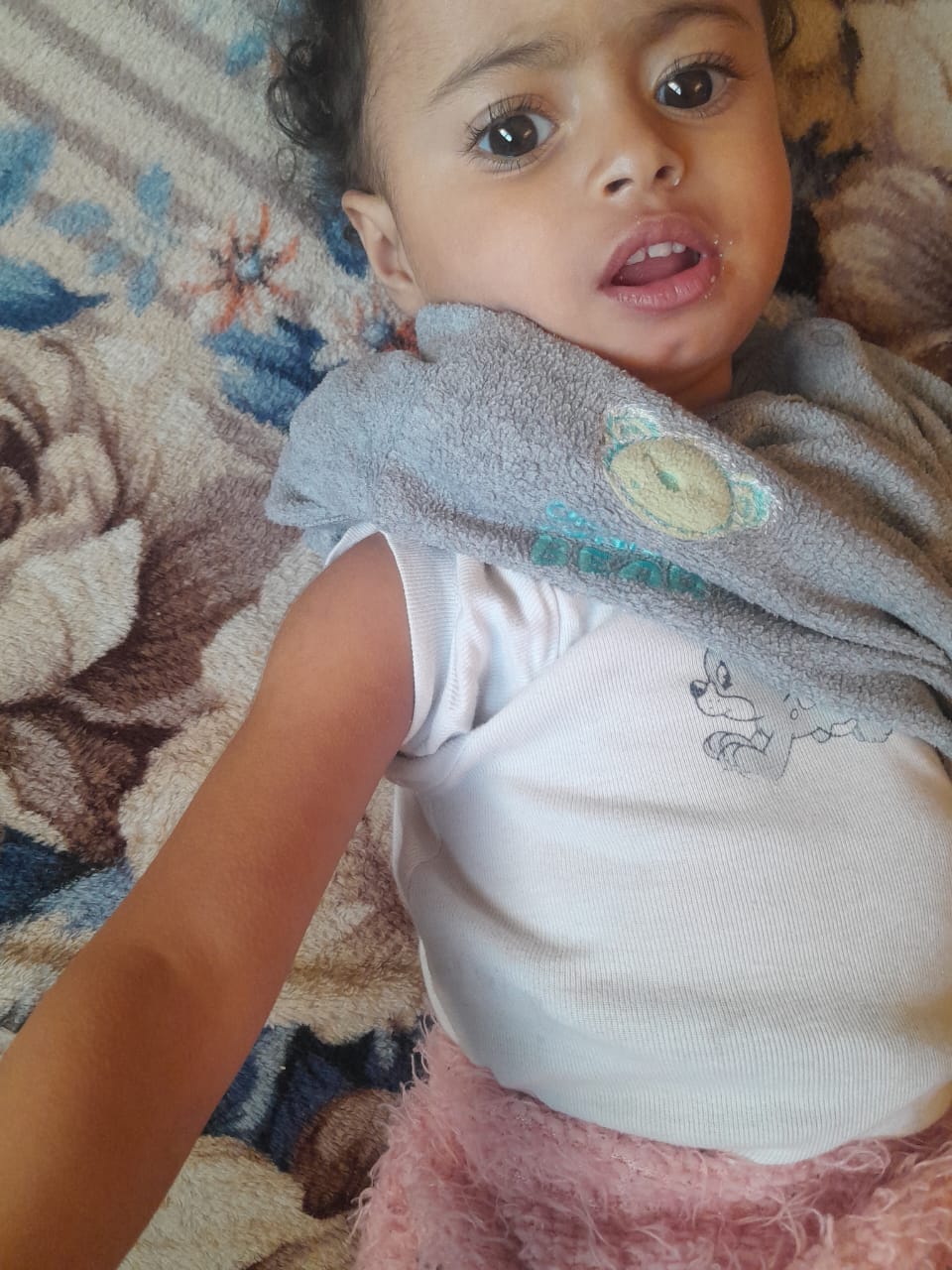
Maryam, late 2025.
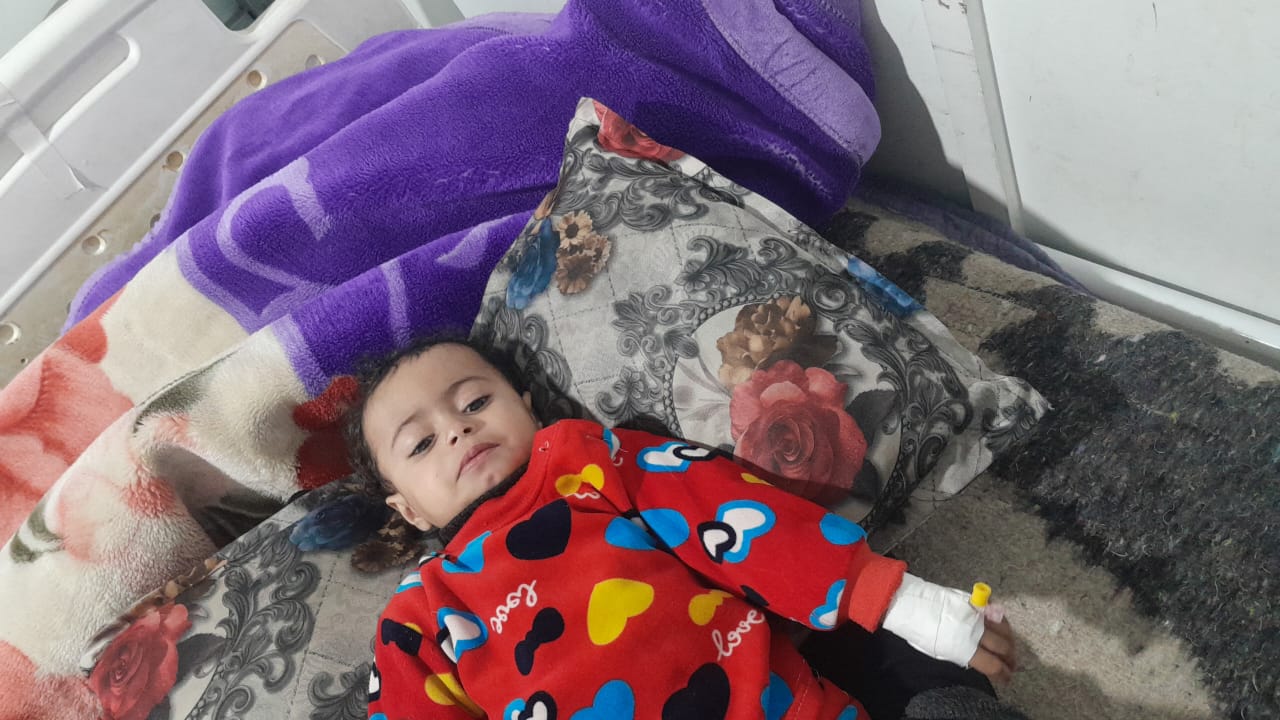
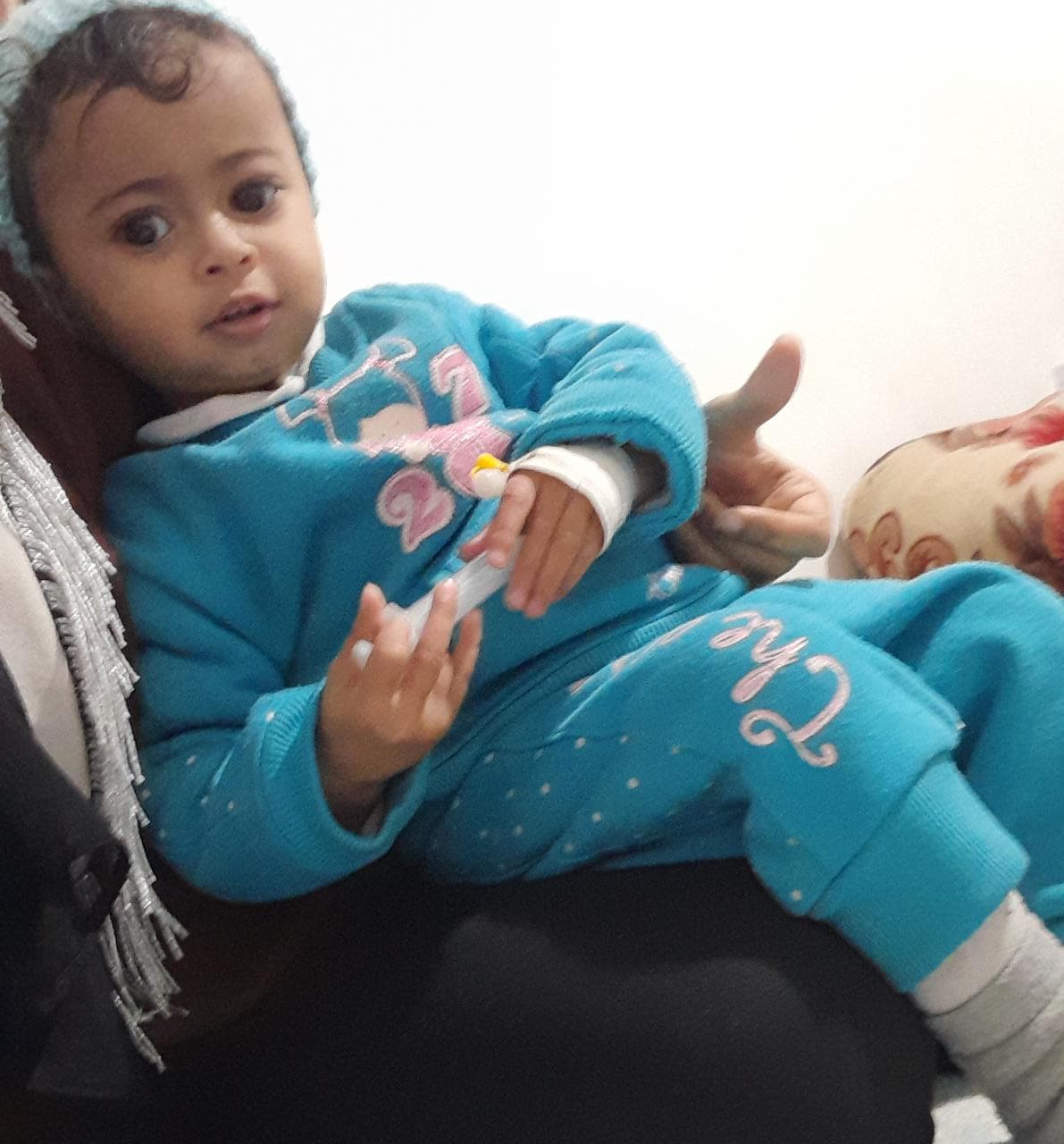
In early 2025, Maryam was admitted to hospital with severe malnutrition. More than a week, with no visible improvement. A baby's body in Gaza has no margin — any deficit shows immediately.
In March, Gaza Little Lights began assisting them regularly. It didn't solve everything, but it stabilised some things: there was milk, there was food with more consistency.
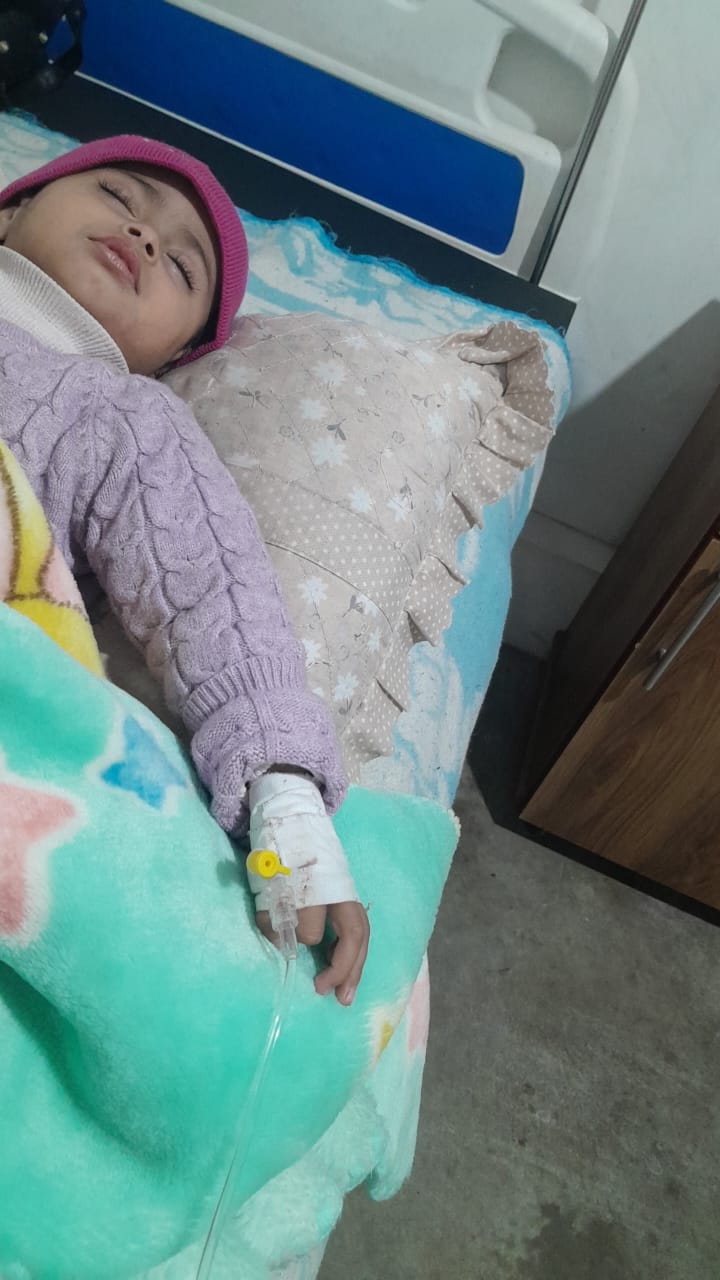
Maryam during hospitalisation, early 2025.
Hanin has asthma. In an apartment with windows that don't fully close, in a city under continuous bombardment, asthma is a constant variable.
Shortly before the evacuation, there was a particularly difficult night. Bombs fell nearby. The dust came through every gap in the apartment. The food they had was destroyed. Part of their clothing scorched. Hanin had a severe asthma attack. They went outside with no plan, convinced the building would be gone when they returned. In the morning it was still standing. They went back. In Gaza, going back to a half-destroyed building is what you do when there is nowhere else to go.
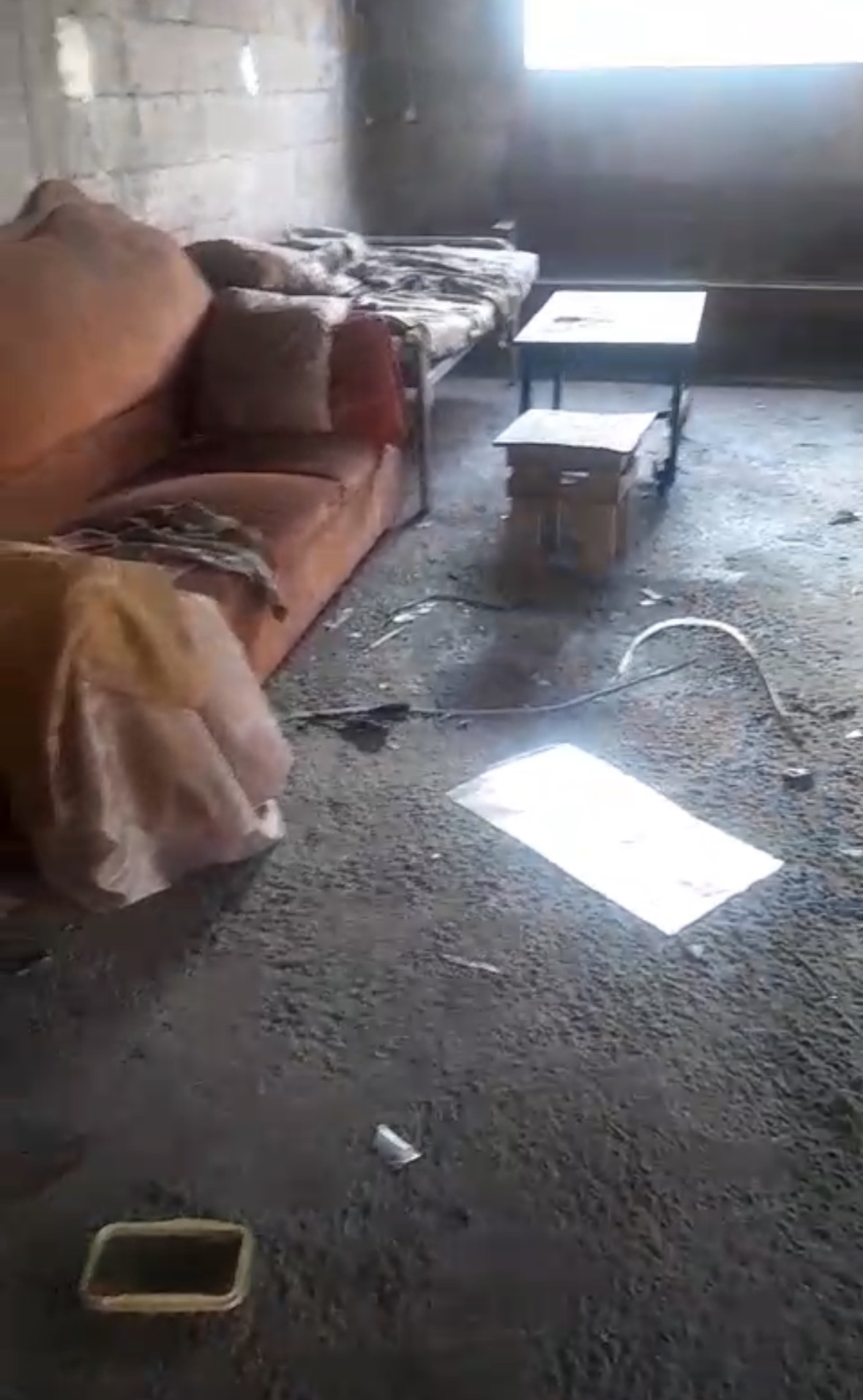
The apartment after the bombing.
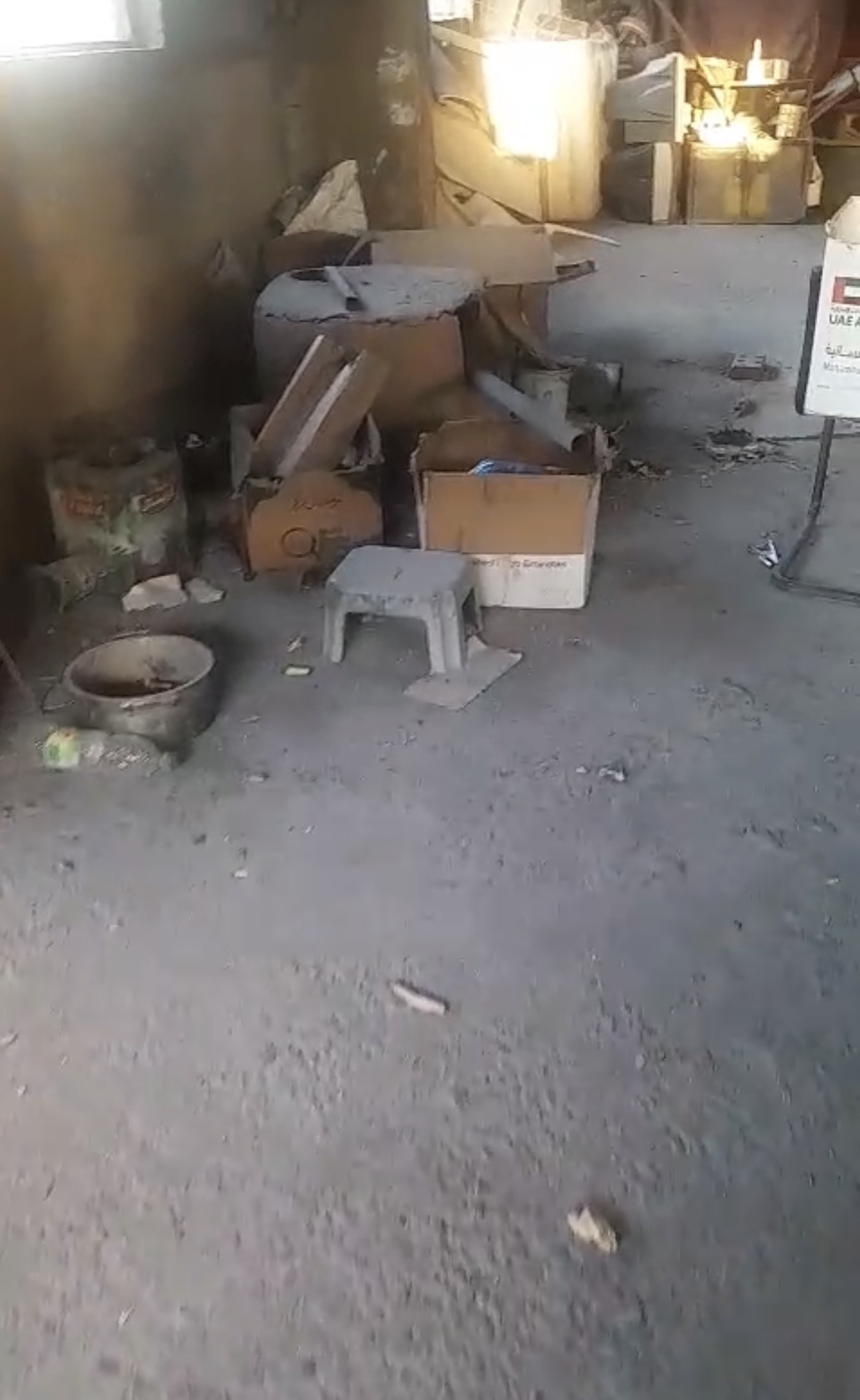
The ceiling.
In November 2025, a CT scan confirmed a giant hepatic hemangioma — 13.8 × 6.3 × 4.8 cm — occupying most of the right liver lobe. Stable for now, but every day without treatment increases the risk of a life-threatening rupture. In December, the Ministry of Health issued a referral for treatment abroad.
Weeks before any of this came to pass, Instagram closed Hanin's account. Impossible to recover. I tried myself and almost lost the only account I have left. Every time an account falls, a network of donors and followers falls with it.
Field diary · Marta
26 May 2026 — today
The WHO has called Hanin. There is a place in a medical evacuation. She leaves after Eid.
She tells me herself. No official coordinator, no system. Hanin tells me.
She is terrified. She says she would rather stay in Gaza and die there than face what is waiting for her on the other side.
I have to convince her to go.
I talk to her every day. I tell her she will not be alone, that we will be there. I put together a support group with trusted donors. In a few days we raise $400 — for her, right now, a record.
There is another fight: the authorities have not included Maha on the evacuation list. Maha is eleven. There is no family left in Gaza to leave her with — everyone is gone. We push until they include her.
With part of the money raised, Hanin buys clothes, shoes, and food for the journey. The first new things they have had in a long time.
Hanin writes to me from the border. They are stopped, waiting. She sends me a photo.
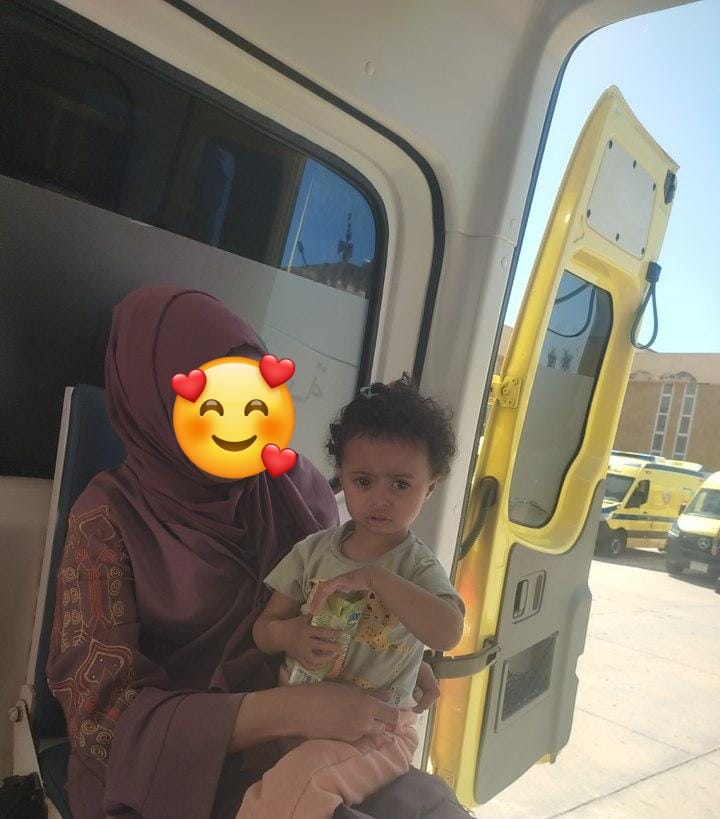
Hanin and Maryam in the ambulance. Border crossing, 3 June 2026.
They have left Gaza.
I find out they left when she writes to tell me they have arrived. No warning. No coordination. That is how this works.
They arrive at Bir Al-Abd, northern Sinai. A transit centre. Two rooms with bunk beds — one for men, one for women. Five families per room. Too many people for the space.
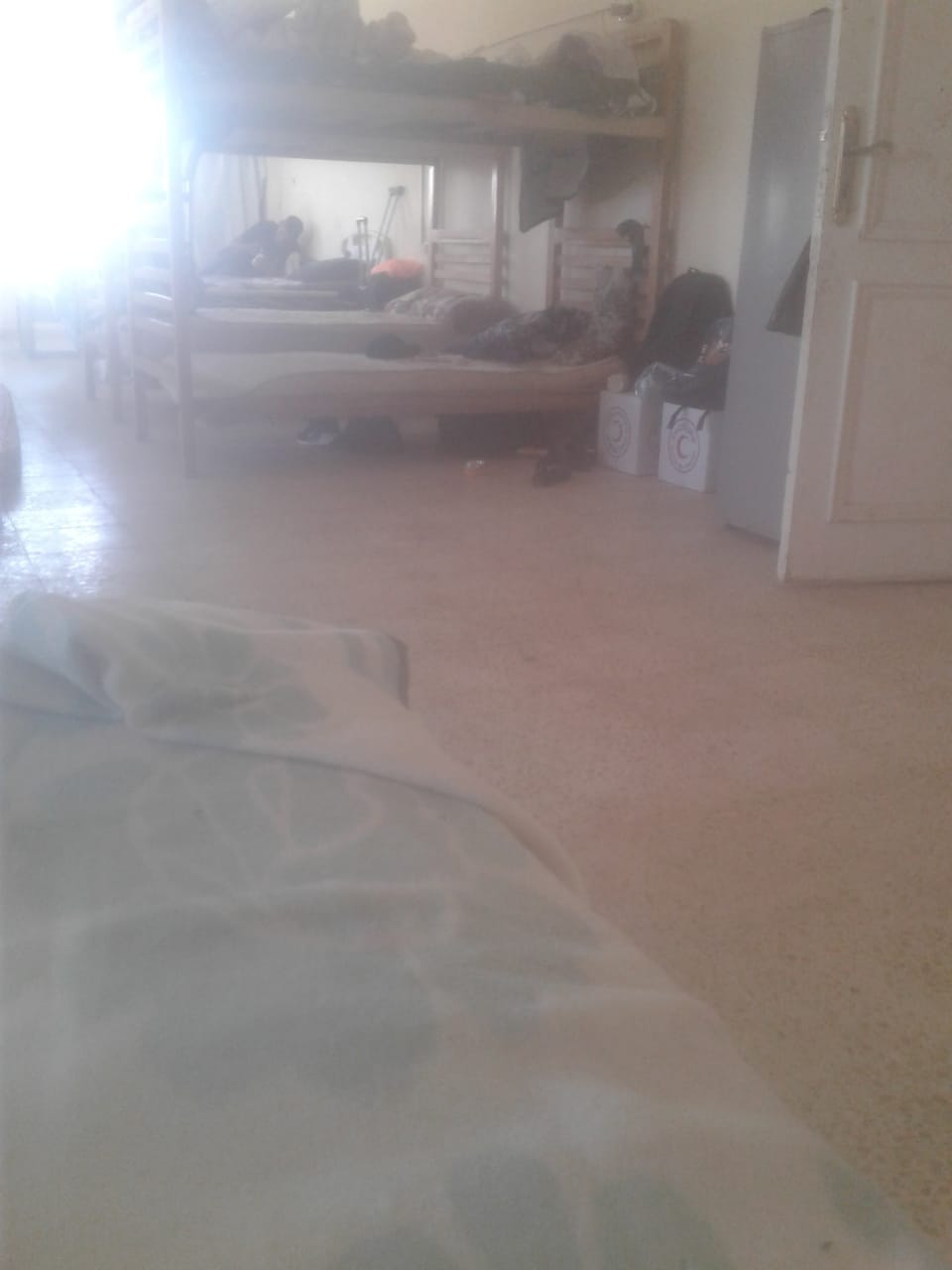
The accommodation at Bir Al-Abd.
Every morning: bread and cheese. That is all they provide. No medication — it was left behind in Gaza. No documents — they have been kept by the authorities. No information. Just: wait.
With the money she has, Hanin buys extra food, milk for Maryam, nappies. She pays $50 to keep her mobile line active in Egypt — without that, she is cut off from everyone.
Hanin writes to me these days in a tone I have not heard from her before. She regrets having left. Once, twice, several times. Do I know for certain she made the right decision? Will there really be a hospital on the other side of this wait?
I don't know what to tell her. But I tell her to keep going.
News of the transfer reaches me during the weekend, at odd hours, in fragments.
Thursday evening, around seven, they were told they were being transferred. Taken to Bir Al-Abd hospital, where they waited under heavy guard without explanation. At ten a bus arrived. Night travel, security checks, searches along the way. They arrived at Masakin Al-Abd residences at half past two in the morning.
They were left on the bus until five in the morning.
When an employee arrived, he refused to receive them. Bir Al-Abd had not requested authorisation. A bureaucratic dispute between two institutions, and Hanin's family the victim. Bilal went from employee to employee asking for a room. Sent to high floors, went up, nothing, came back down, another floor. Until seven in the morning. They were offered a 3×3 metre room, already occupied by other families. They refused. They were put on the street.
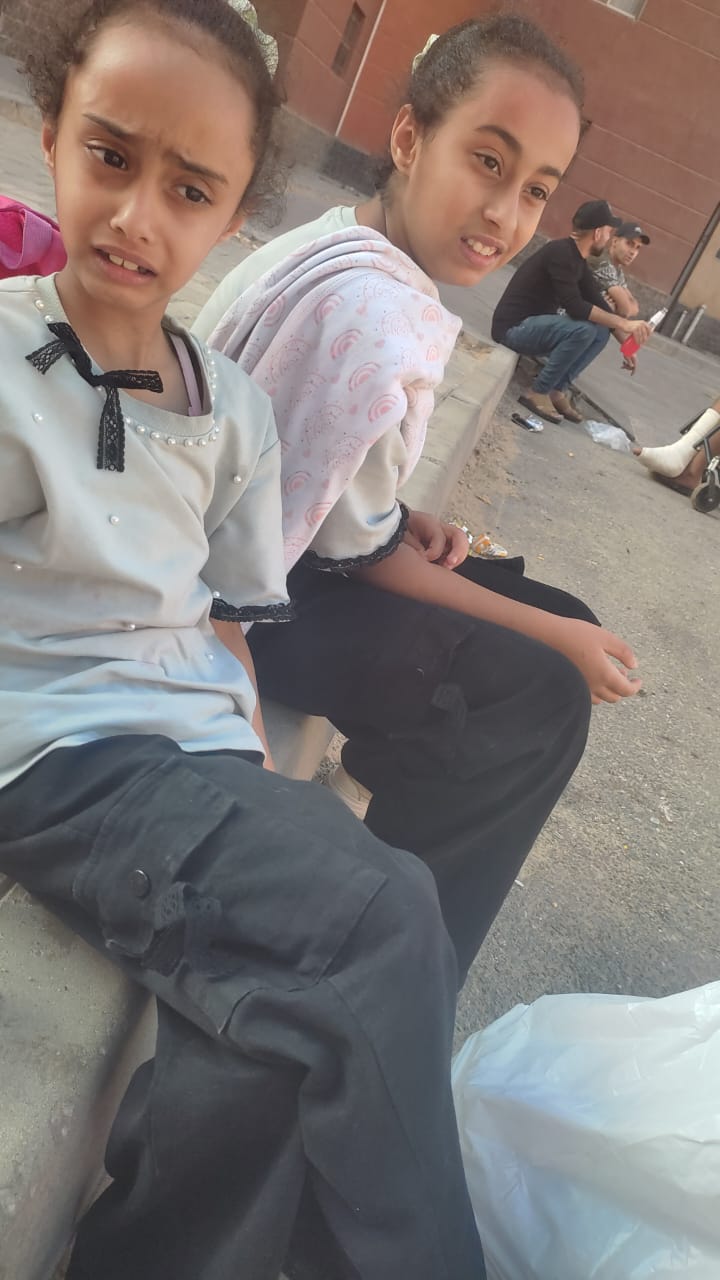
Sama and Maha on the street in Cairo, waiting. 11 June 2026.
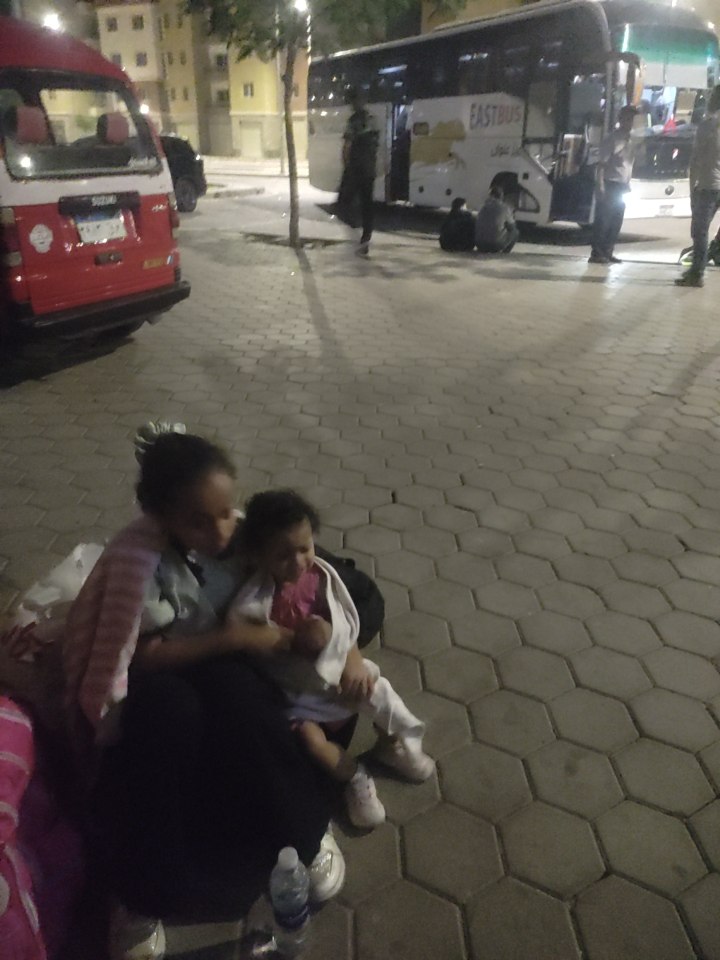
Maryam and Sama on the ground at night, with nowhere to go.
They stayed on the street until five in the afternoon. No one intervened.
When they finally got authorisation and recovered their papers, they went to the home of a contact of Bilal's. A roof for that night. Nothing more.
Hanin writes when they arrive. She tells me she wishes she had stayed in Gaza and died there.
A member of Displaced Children's Fund manages to contact someone in Egypt. That person reaches Hanin and Bilal and gives them the first concrete guidance since leaving Gaza: apply for passports, find their own accommodation, build a base.
Each passport costs $40. There are five of them.
It is the first useful information they have received since crossing the border. Ten days after leaving Gaza.
Hanin has a hospital appointment on Wednesday.
They are sleeping in the home of a contact from the support group. Not their home. Not permanent. They need to rent — and for that they need a deposit, bedding, towels, kitchen basics. Everything they had in Gaza and left behind. Starting from zero in a country that is not theirs, without documents, without a network.
The Palestinian embassy told her she must go to a public hospital, get a medical report, and apply for the embassy to cover her treatment. Response time: 15 days. Meanwhile, they need to be able to live.
The campaign has little visibility. Few people know her story. That is what needs to change.
I have been following this family for over a year. I know what it costs to hold a campaign, to keep attention on a story when the world has too many stories in front of it. And still I am here. Because Hanin has never asked for help without being desperate. Because her daughters are very thin and have never had anything. Because Maryam started her life with severe malnutrition and is still fragile. Because Bilal looks for solutions with a dignity that makes your hands hurt from not being able to do more.
They are a family that has been punished for a long time. And they are still standing.
Update — 18 June 2026
Yesterday, Wednesday, Hanin had her first hospital appointment in Cairo. She waited nearly 12 hours. When they finally saw her — because she is Palestinian, she was seen last. The result: a written referral summarising her known condition, with no new tests carried out. To have her surgery covered by the Palestinian Authority, she must now submit a formal application to the embassy.
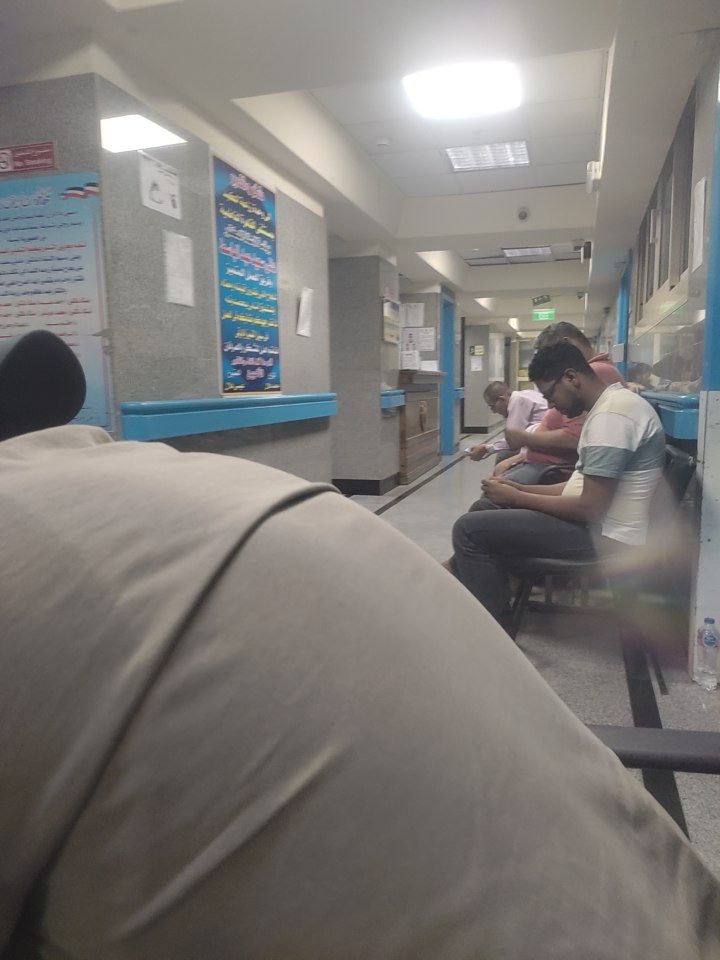
Waiting room. Cairo public hospital, 17 June 2026.
Meanwhile, Maryam is sick. Fever, flu. Her immune system has never been strong — the consequence of years of inadequate nutrition starting from birth. There is no margin in her body for illness.
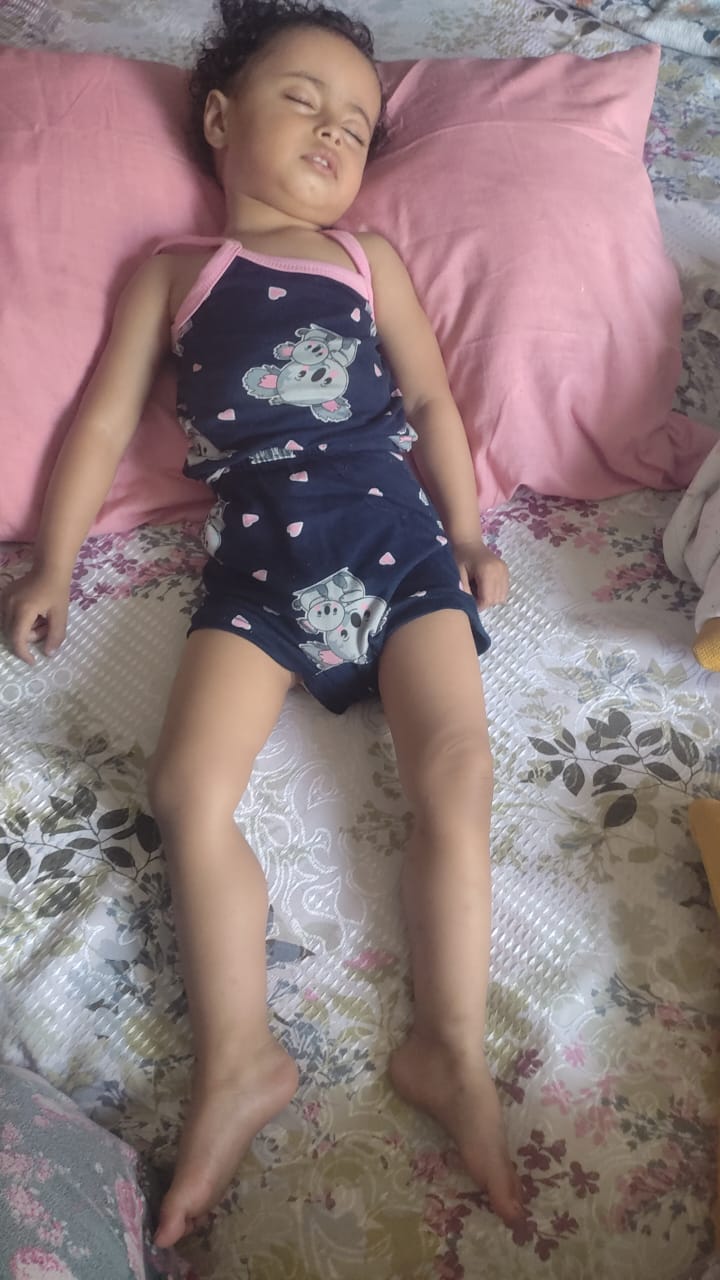
Maryam, sick with fever. Cairo, 16 June 2026.
On housing: we have no solution yet. Cairo is expensive. Rents are high even for small rooms, and building a sustainable donor base to cover monthly costs is going to be very difficult. The support group has helped bridge these first days, and we have some funds — but not enough, and not for long.
We are now contacting every NGO in Cairo that works with Palestinian refugees, asking for help with housing. We will not stop until we find something.
Update — 21 June 2026
Passports. Hanin went to the Palestinian embassy and submitted the paperwork to apply for passports for her daughters. The answer was difficult: because the girls only have identity documents and no previous passports, Israeli approval is required to issue them. She is waiting. No timeline given.
Health. Maryam is still sick. Hanin herself is exhausted after the long, hard journey out of Gaza — she wants to see a doctor to make sure she is holding together. She has not had a moment to think about herself until now.
Housing. No news. The situation has not changed. Finding a room or a flat in Cairo remains the most urgent open problem.
Money. The $100 sent arrived as approximately 5,000 EGP after fees. Maryam's treatments have cost around 2,000 EGP so far. Hanin has $250 left — enough to move around and buy food for now, but nothing more. Transport is expensive because she doesn't know the city and has to rely on private cars. Clothes are unaffordable — she could not buy a single pair of pyjamas for her daughters. They left Gaza with almost nothing, and the luggage limit made sure it stayed that way.
We are now writing to every NGO in Cairo that works with Palestinian families, asking for help with housing. We will not stop.
Update — 1 July 2026
Hanin spent part of the day making calls — the Red Cross gave her contacts for organisations that might help with housing. Some answered, some did not. Save the Children responded and asked for her details.
Maryam had improved over the last few days but is unwell again today. Sama is also sick. The heat in Cairo is intense and Hanin is feeling the physical toll.
The family is currently staying with a family friend while we continue looking for a more stable solution.
We are still in contact with organisations in Cairo. We will update as soon as there is news.
Update — 6 July 2026
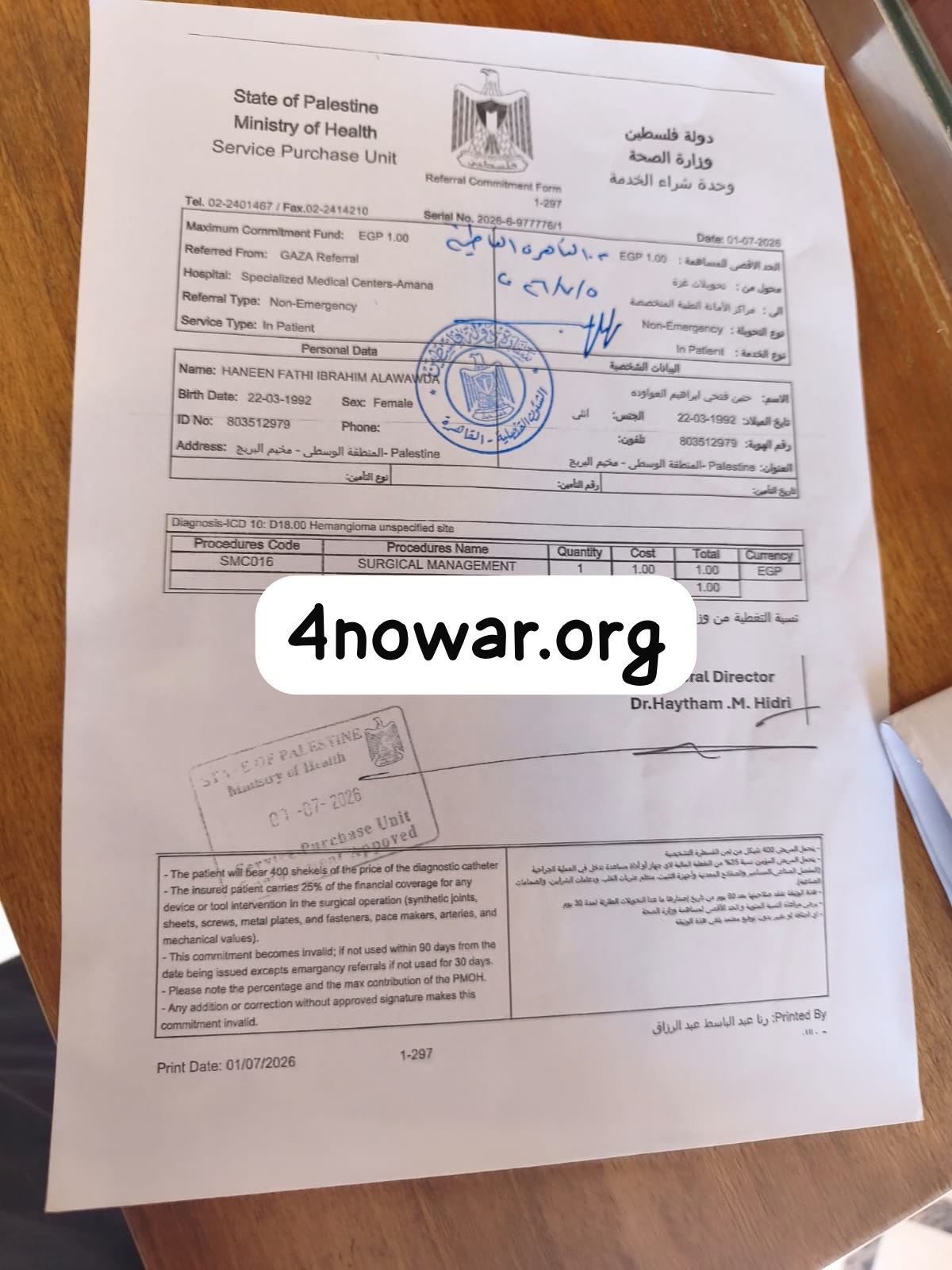
Referral commitment form from the Palestinian Ministry of Health, approved 1 July 2026.
Hanin will receive her surgery in Egypt, funded by the Palestinian Ministry of Health — the way it should have been from the start. For now, there is no further information.
Update — 19 July 2026
During the first half of July, Hanin has spent much of her time going from doctor to doctor, running every test they ask for.
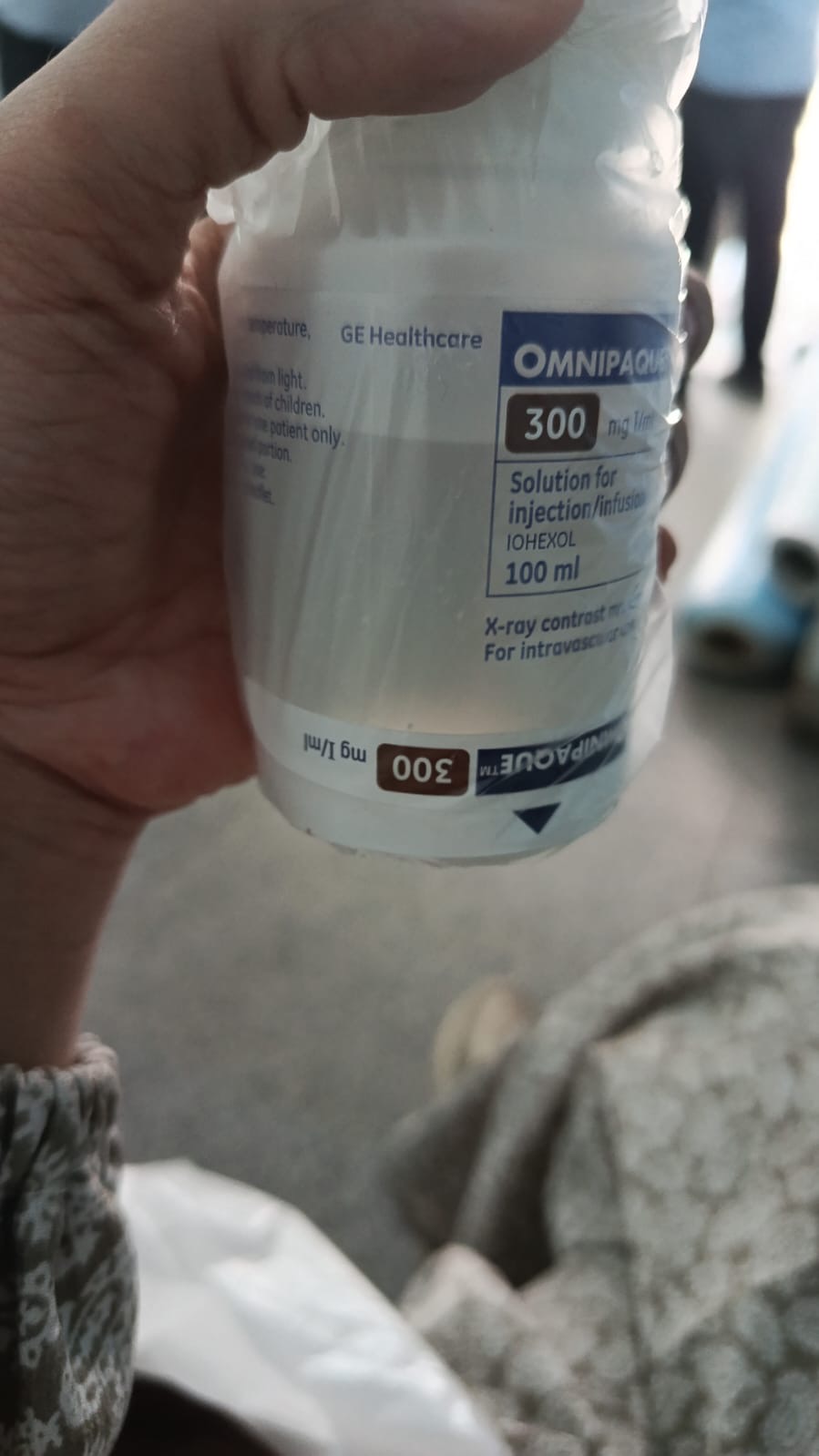
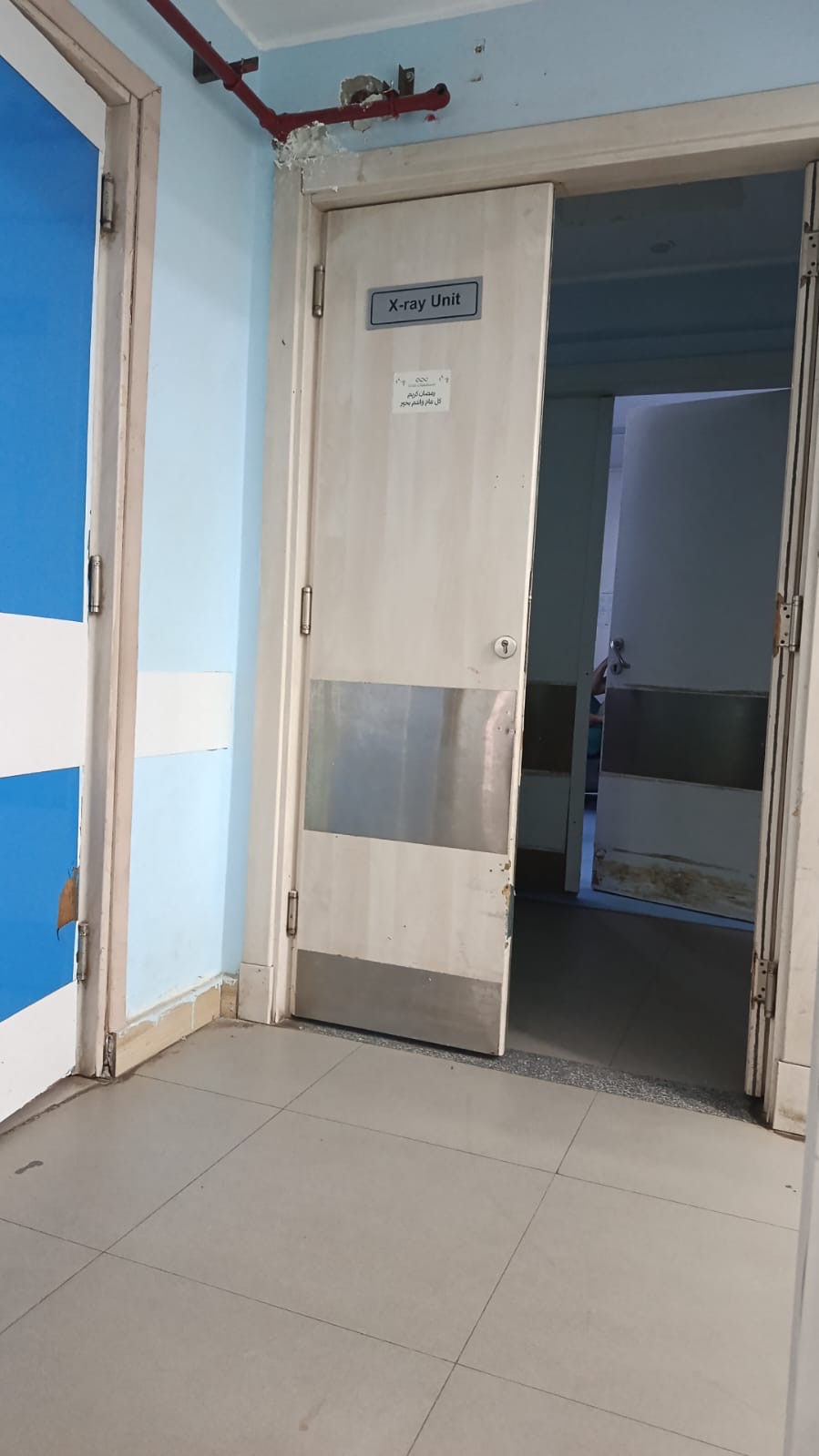
On 19 July she told us she's going to have an MRI. The doctors want to take a closer look at something they found in the last test. There are no results yet — we'll share them as soon as we know.
Update — 20 July 2026
Patients evacuated for medical reasons through the Medevac mechanism, coordinated with the WHO, do receive care: Egypt takes them into hospitals in Cairo, Ismailia and El Arish, with international support — the EU and countries like Spain send medical supplies and funding. Many are later transferred to a third country to continue treatment.
But Hanin doesn't have refugee status, even though she was evacuated through this mechanism. This is part of the problem we've been describing: UNRWA, the UN agency for Palestinian refugees, doesn't operate in Egypt — only in Gaza, the West Bank, Jordan, Lebanon and Syria. And UNHCR, the general refugee agency, doesn't usually register Palestinians there either, because in theory they 'belong' under UNRWA's mandate, even though that agency doesn't work in the country. This leaves people arriving from Gaza in a legal void: neither recognised refugees nor regular residents. What they receive on arrival is only a temporary residency permit — usually 45 days, up to 3 months — not a protection status. Many people's permits have already expired. That's why the Egyptian government doesn't provide financial aid: officially, it doesn't recognise them as refugees with a right to benefits.
The bad news
Hanin has run out of money. We spent what we had on food, milk and diapers, medicine for the girls — who have been unwell — and transport: the hospital is three hours away by public transport from where they're staying. She needs money to keep sustaining this.
This doesn't mean things will simply get better on their own: she's still sleeping with the girls in a room someone is lending her, all five of them on the floor. The girls' doctors aren't public, there's no money for clothes, and they can't access education.
The good news
Hanin can try to obtain that status. We've passed her contacts for organisations currently helping with this:
- UNHCR Egypt — even though they don't always register people from Gaza, it's worth registering as an assistance applicant: help.unhcr.org/egypt
- Refugees Platform in Egypt (RPE) — an NGO specialising in legal advice, connecting people with services and aid for Palestinians stranded in Egypt. 'I Need A Service' form, WhatsApp: +44 7441 425270 — rpegy.org
- Mersal Foundation — medical and other aid. Lines: 01224507210 / national line 19340 (based in Maadi, Cairo)
- Mastoora Initiative — help with food and temporary housing, via Facebook or email: mastoorainititave@gmail.com
- Abwab Elkheir Foundation — supports stranded Palestinian families with direct financial aid, funded by donations
- The Palestinian Embassy in Cairo — sometimes handles assistance requests for people from Gaza; worth registering there if she hasn't already.
All of this is a slow, delicate process, and there are no guarantees. We're sharing it carefully: it isn't an immediate solution, it's a path we're going to try to walk with her, step by step.
If you can, this is a good moment to help cover what the system won't: donate to Hanin →
Update — 29 July 2026: Maha turned 12
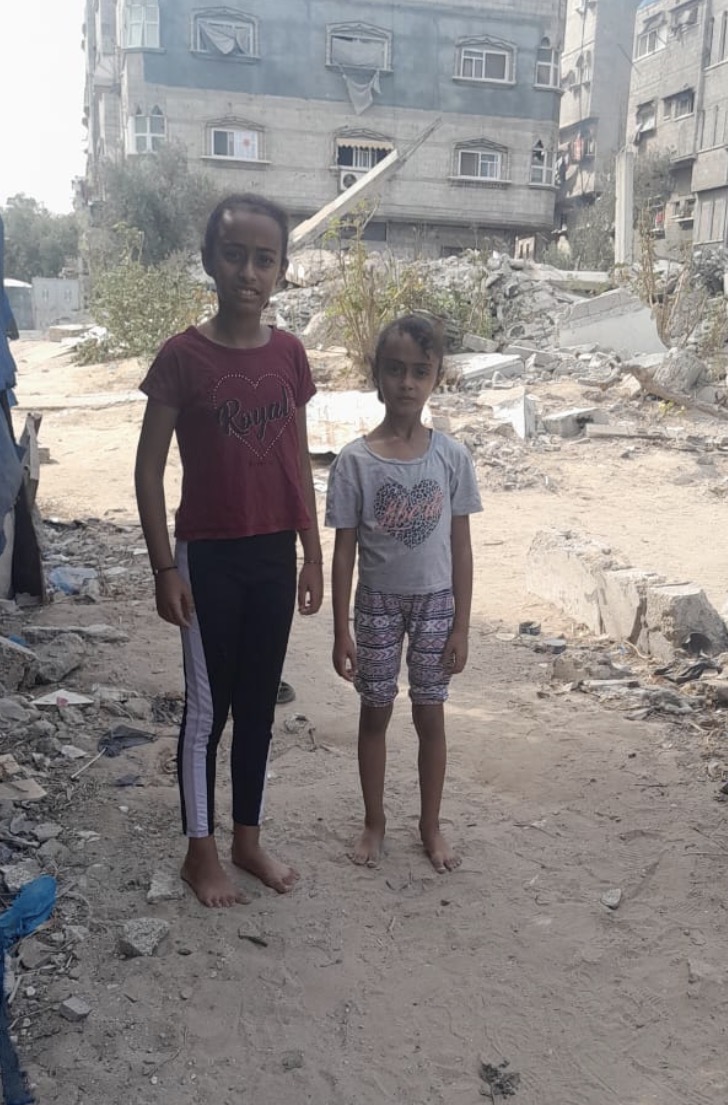
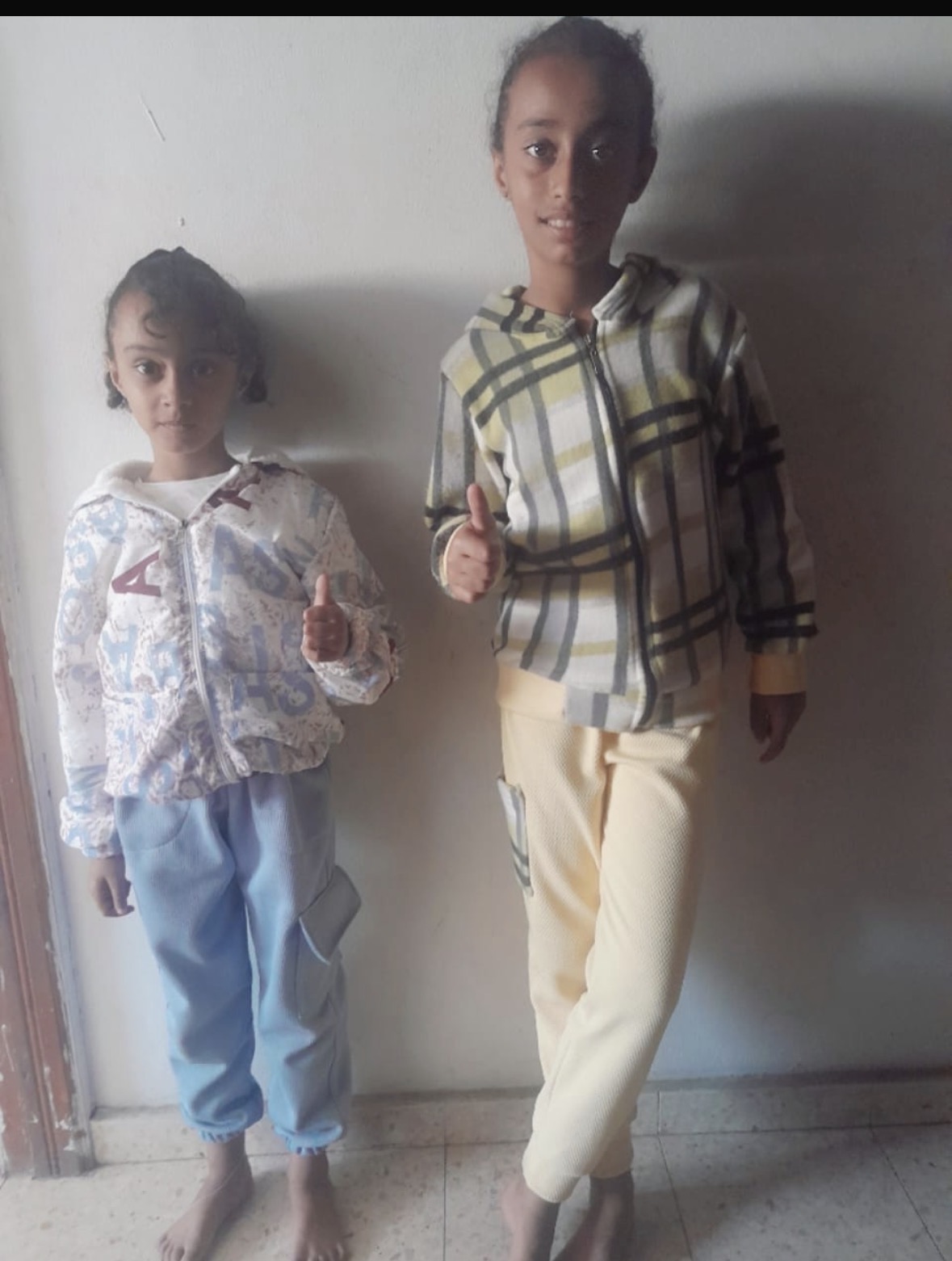
Maha and Sama, in Gaza. Before Egypt.
Yesterday, 29 July, Maha turned twelve years old.
No cake. No party. No new dress. Not even pocket money to buy herself something small. She spent her birthday the same way she spends every day in Cairo: in a room she shares with her whole family, with no school to go to, no regular medical checkups, and barely any clothes to her name.
These photos are from before — from Gaza, before the evacuation. Even then, life had already taken so much from her. Now, in Egypt, she has even less: no education, no healthcare, no space that's hers, nothing that marks her as a girl who's just turned twelve.
We want to give her something for her birthday. Not much — just something. A dress, a toy, a small treat, anything that tells her someone remembers this day matters, even when the world around her has given her so little reason to think so.
If you can spare even a small amount, it would mean everything to her: donate a birthday gift for Maha →
Twelve years old. Still waiting for someone to notice.
They need approximately $600 right now.
Passports, a housing deposit, bedding, towels, kitchen utensils — everything left behind in Gaza. While the Palestinian embassy processes a 15-day application for medical treatment, this family needs a base from which to survive.
Donate on Chuffed